The Pub (1963)
last orders and lost years
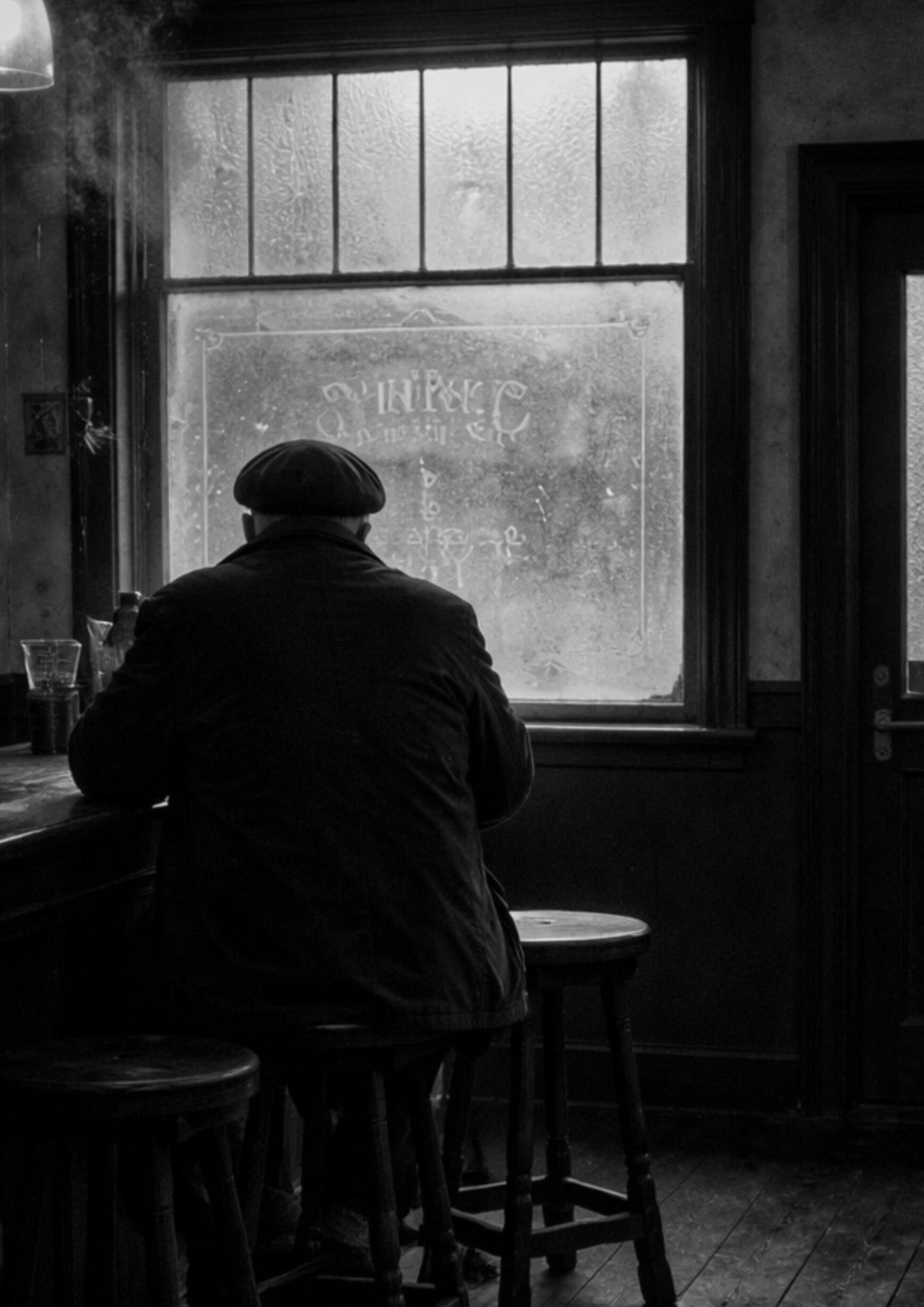
Released in autumn 1963, The Pub is often regarded as Crimea Street Films’ most commercially accessible production, though even supporters admitted this remained a highly relative distinction.Directed by George Ransom, the film unfolded almost entirely within a small public house during a series of wet weekday evenings in an unnamed northern town. Rather than focusing on a central dramatic plot, the production observed the overlapping routines of regular customers whose conversations, silences and repeated grievances gradually revealed lives shaped more by habit than ambition.Much of the film’s atmosphere relied on long static shots, cigarette smoke, rain against frosted windows and the persistent sound of distant traffic beyond the bar.
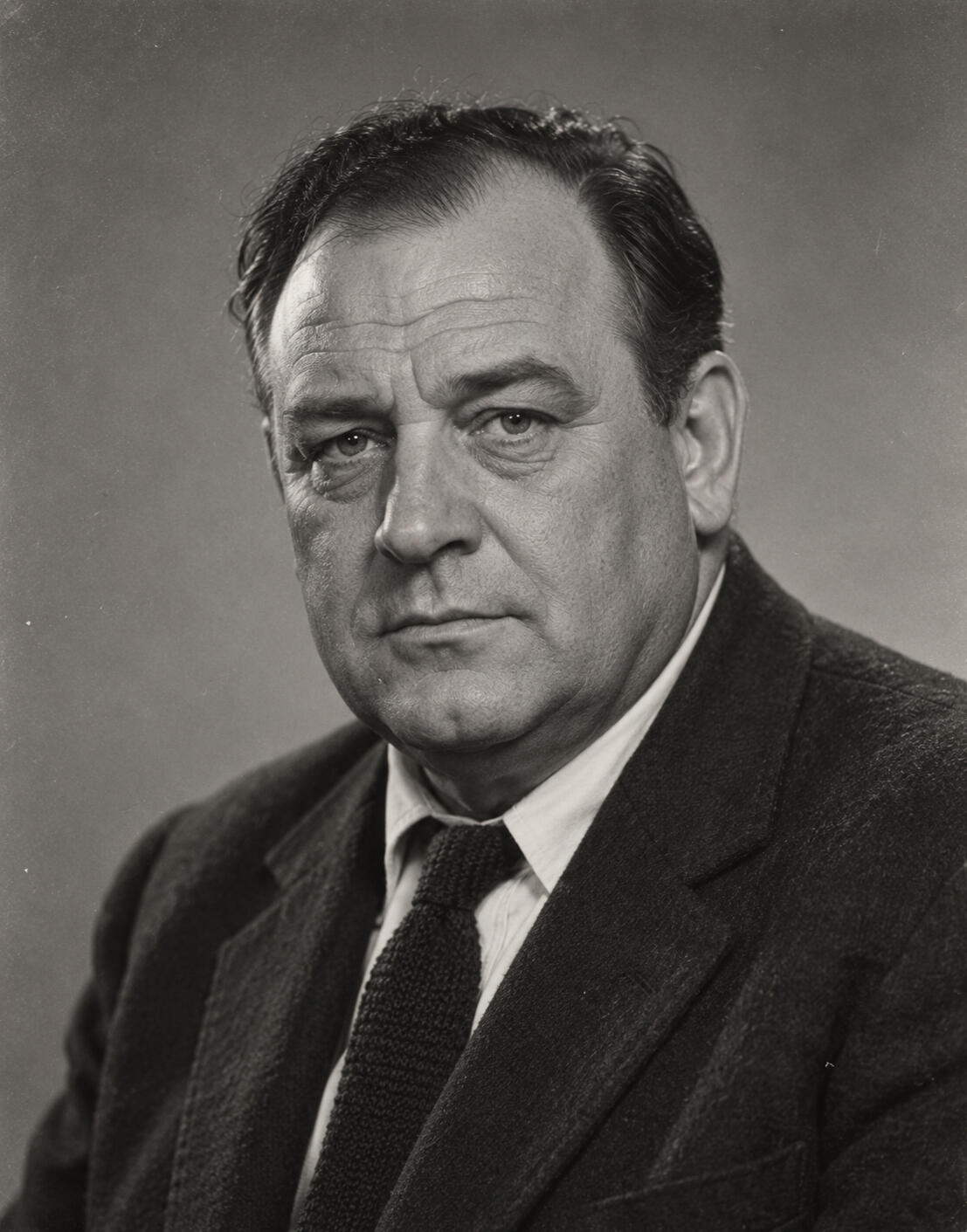
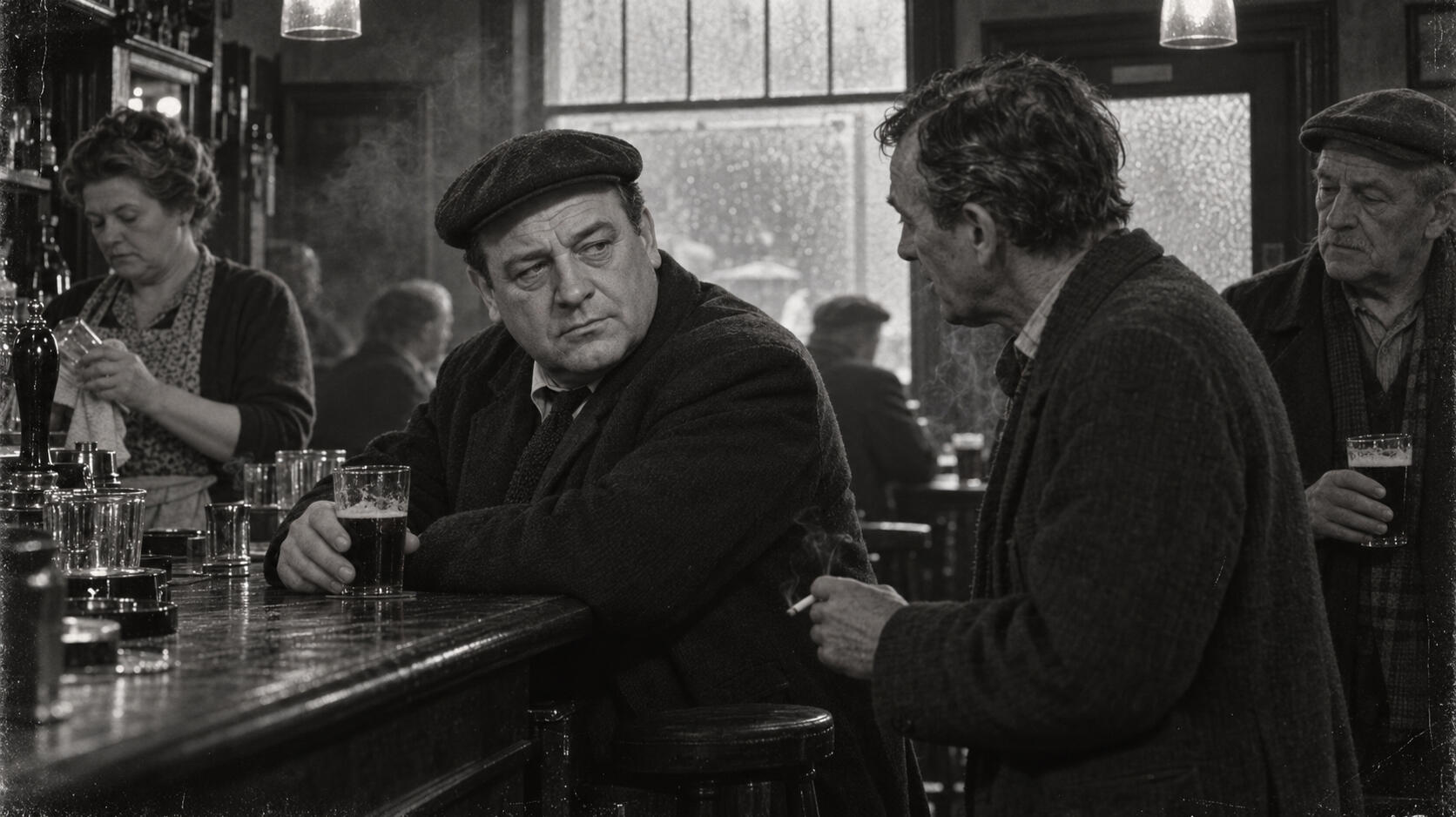
Frank Mallory (1911–1983)Born in Bolton, Frank Mallory left school at fourteen and worked as a warehouseman, tram conductor and brewery drayman before joining a touring repertory company after the war. His broad build, heavy features and naturally weary expression brought him regular work as landlords, foremen, policemen and men who had already heard every excuse available.In The Pub, Mallory played Walter Butler, a widowed factory worker who occupied the same stool every evening and appeared to know the private history of everyone who entered. Although Walter spoke relatively little, his presence gave the film its centre. Much of Mallory’s performance consisted of listening, drinking slowly and deciding whether a conversation deserved his involvement.Mallory was 52 when the film was made. Several reviewers singled him out for praise, with one describing his performance as “a complete life expressed through the handling of a pint glass”.He continued working in regional theatre and television throughout the 1960s and 1970s, usually playing men whose authority came from size, silence or possession of the keys. He disliked rehearsals and claimed that repeating a scene too often removed “whatever truth it might once have contained”.Mallory was a devoted collector of pub ashtrays.He retired from acting in 1978 and returned to Bolton. He died in 1983, aged 72, shortly after 'Songs of Praise'.
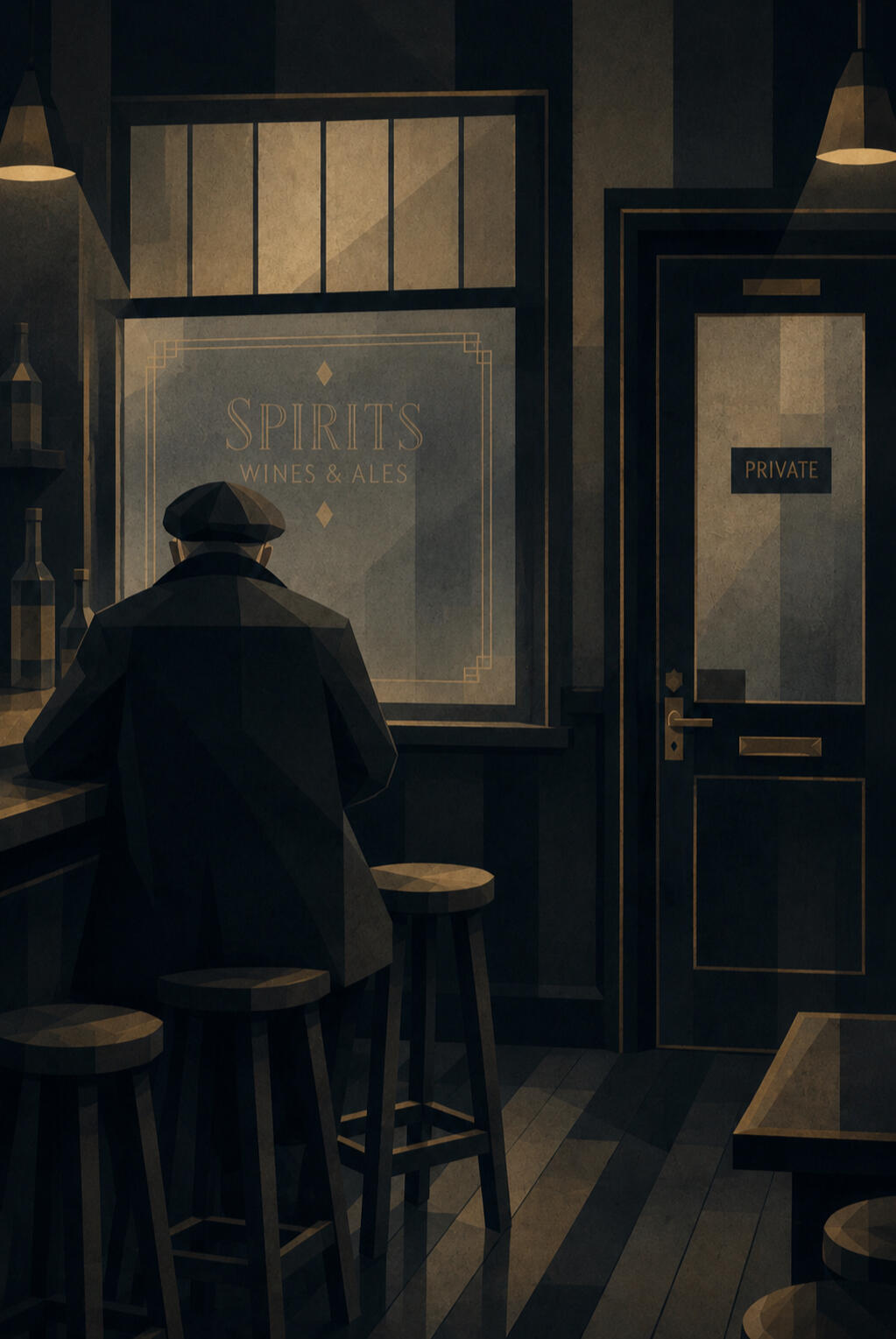
The Pub reduces a familiar northern interior to shadow, geometry and pools of amber light.The solitary drinker is built from hard, angular planes, his dark overcoat merging with the bar and surrounding woodwork until he becomes part of the room itself.The composition draws on Art Deco architecture and Cubist portraiture, using repeated verticals, framed rectangles and fractured surfaces to create a sense of enclosure.Charcoal, muted bronze and tobacco brown replace conventional black and white, giving the print the subdued warmth of an old pub shortly before closing time.Available exclusively through FCSF, this artistic interpretation is available unframed on 240 gsm art paper and measures 16 x 20 inches.
What did the critics think?
Contemporary reviews were among the warmest the studio ever received, though praise remained characteristically measured.The Daily Herald described the production as:“Quietly observant, unexpectedly moving and occasionally very funny in the way real life often is.”While the Birmingham Gazette offered a more cautious response:“A meticulously photographed study of men avoiding conversation by sitting very near one another.”Audience reaction proved modestly positive, particularly in northern cinemas where the pub interiors and dialogue reportedly felt immediately recognisable. Several critics also praised Albert Hughes’s cinematography for capturing what one review called:“the melancholy glow of closing time.”Retrospective criticism has often identified The Pub as one of Crimea Street Films’ more humane productions, balancing the studio’s characteristic austerity with moments of dry humour and quiet companionship rarely seen elsewhere in its catalogue.
From the archive
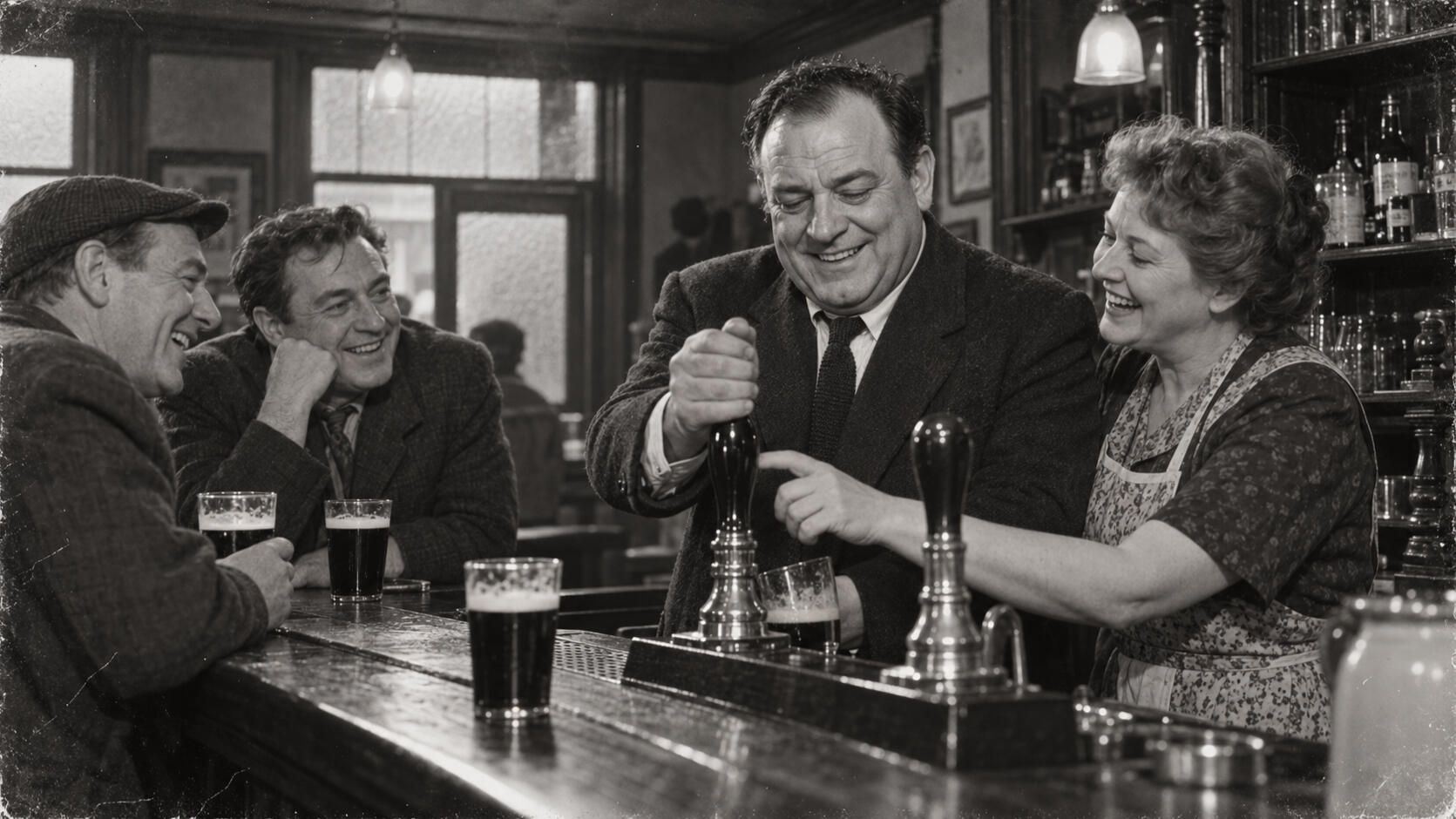
Filming was repeatedly interrupted by regulars wandering into the pub and ordering drinks.After several failed attempts to clear the room, director George Ransom allowed them to remain.Three can be seen in the finished film, none of whom ever received payment.
Publicity shot from the archive
The artwork of Reg Baines
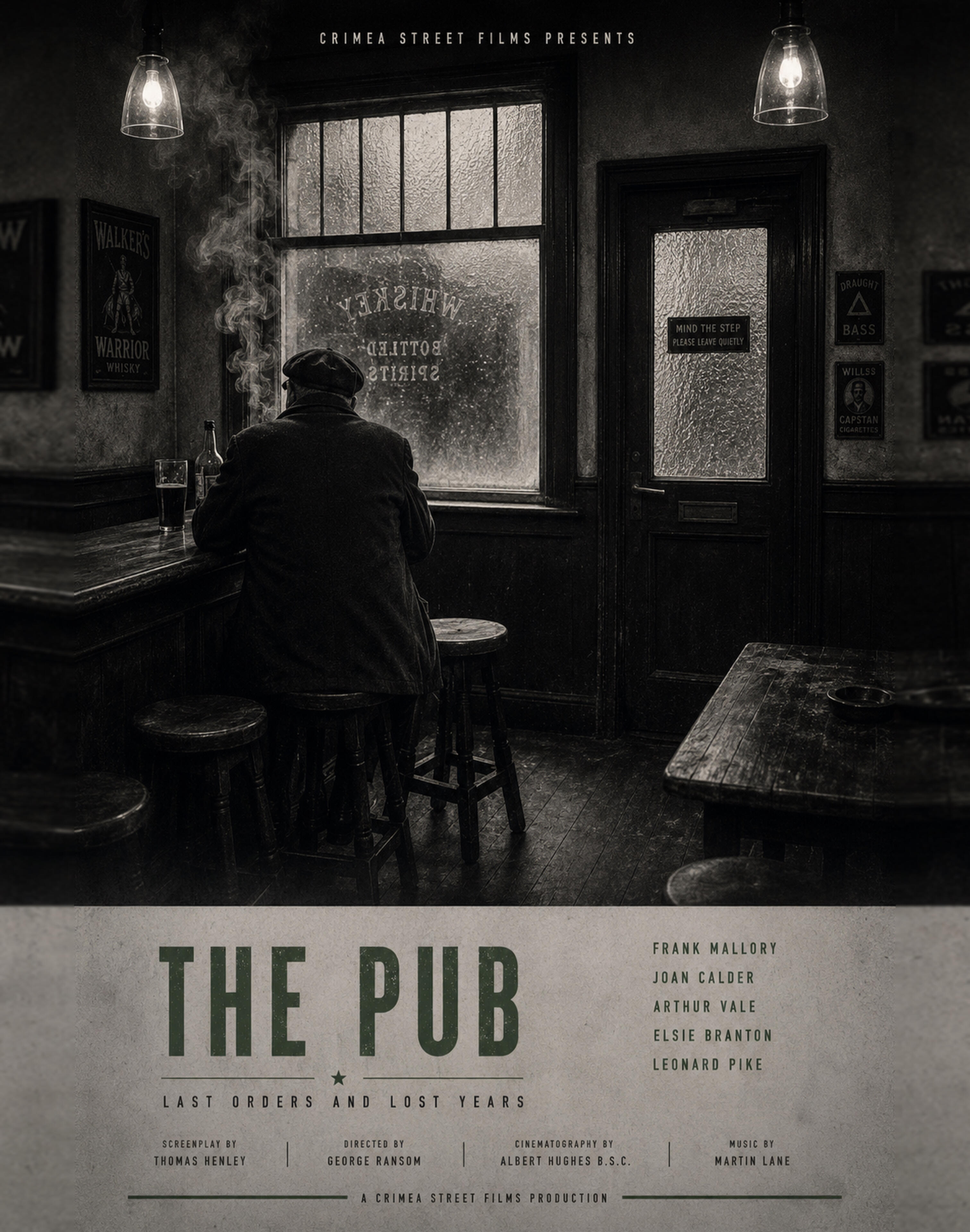
The original posters created by Reg Baines are synonymous with the studio and are very much part of its history.They would have been seen throughout the North of England outside cinemas, on hoardings and in places such as train stations.Most of them were damaged in a fire at the studio in late 1966, but we are delighted to now work with Parbold-based artist, Brian Astley.He has faithfully reproduced each poster to a standard that our Reg would have been proud of and each one is available unframed on 240 gsm art paper as a 16 x 20 inch homage to the films we celebrate.